
Hydro Jetting for Industrial Pipe Cleaning: Why High-Pressure Water Outperforms Traditional Methods
Industrial pipelines rarely fail overnight. Most flow problems begin with a gradual buildup of grease, sludge, scale, sediment, or process waste inside the pipe. As deposits accumulate, flow efficiency drops, maintenance requirements increase, and the risk of unexpected blockages grows.
Many facilities initially rely on drain snakes, rodding tools, or chemical cleaners to restore flow. While these methods may provide temporary relief, they often remove only part of the obstruction. Residue remains attached to the pipe walls, allowing deposits to reform quickly.
This is why hydro jetting has become one of the most effective methods for industrial pipe cleaning.
What Is Hydro Jetting?
Hydro jetting is a pipe cleaning process that uses high-pressure water to remove deposits, blockages, and contaminants from the entire internal surface of a pipeline.
Unlike mechanical cleaning methods that create a narrow opening through a blockage, hydro jetting cleans the full pipe diameter. Pressurized water exits through specially designed nozzles that cut through grease, break apart sludge, remove mineral scale, and flush debris downstream.
The result is not simply a cleared blockage but a substantially cleaner pipeline.
Why Is Hydro Jetting More Effective Than Traditional Pipe Cleaning?
The key difference lies in how each method treats pipe-wall deposits.
Mechanical cleaning tools primarily target the blockage itself. Hydro jetting targets both the blockage and the material attached to the pipe walls.
For industrial facilities, this distinction is important because recurring blockages are often caused by residual buildup left behind after conventional cleaning.
Hydro jetting helps solve this problem by:
- Removing grease deposits from pipe walls
- Breaking down hardened sludge
- Eliminating mineral scale accumulation
- Flushing loosened debris from the system
- Restoring flow capacity more effectively
This comprehensive cleaning action is one reason hydro jetting is widely used for industrial pipe cleaning, sewer maintenance, and preventive pipeline maintenance.
What Types of Deposits Can Hydro Jetting Remove?
Hydro jetting is effective against a wide range of contaminants commonly found in industrial systems:
Grease and Fat Deposits
Food processing facilities, commercial kitchens, and wastewater systems frequently experience grease accumulation. High-pressure water can cut through these deposits and restore flow.
Sludge and Organic Waste
Industrial wastewater systems often develop sludge layers that restrict capacity. Hydro jetting can break apart and remove these materials efficiently.
Mineral Scale
Hard water systems can develop significant scale buildup over time. Hydro jetting helps remove these deposits without introducing chemical cleaning agents.
Sediment and Debris
Sand, silt, and process residue can collect in pipelines and reduce efficiency. Hydro jetting removes these materials while minimizing manual intervention.
When Is Hydro Jetting the Best Choice?
Hydro jetting is often recommended when:
- Pipes experience recurring blockages
- Flow rates continue to decline after cleaning
- Grease accumulation is severe
- Scale buildup affects system performance
- Preventive maintenance is required
- Mechanical cleaning methods repeatedly fail
In these situations, hydro jetting typically delivers more thorough results than conventional industrial pipe cleaning techniques.
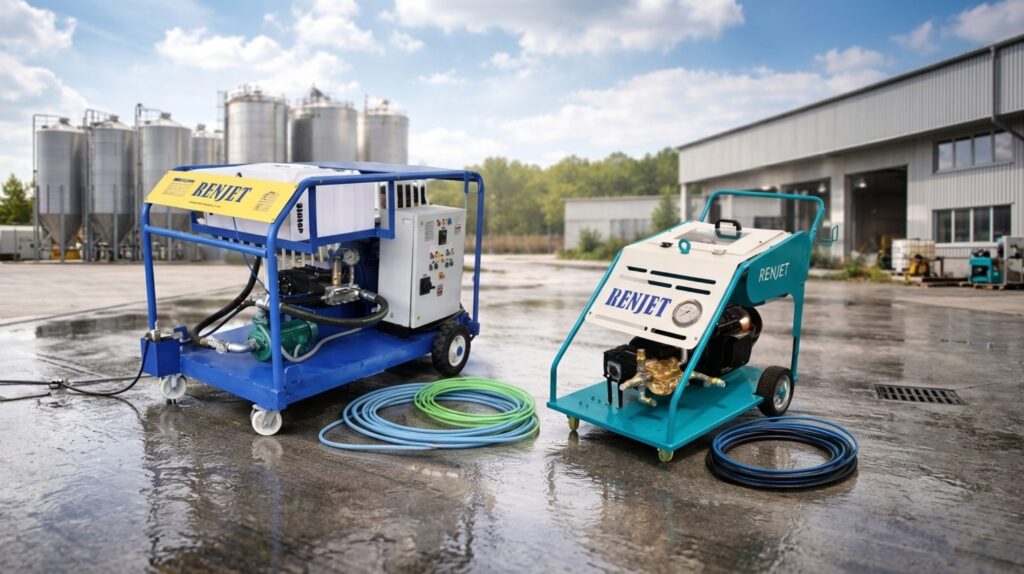
How Does Equipment Selection Affect Hydro Jetting Performance?
Not all hydro jetting applications require the same equipment configuration.
Cleaning performance depends on several factors, including:
- Operating pressure
- Water flow rate
- Pipe diameter
- Hose length
- Nozzle design
- Type of deposit being removed
For example, removing grease from a food processing line requires a different nozzle configuration than removing mineral scale from a municipal pipeline.
This is why industrial users should evaluate hydro jetting machines based on application requirements rather than pressure ratings alone.
Frequently Asked Questions
1. Is hydro jetting safe for industrial pipelines?
When performed correctly and with suitable pressure settings, hydro jetting can be used safely on many industrial pipeline systems. However, severely damaged or structurally compromised pipes should be inspected before cleaning.
2. Does hydro jetting use chemicals?
No. Hydro jetting relies on high-pressure water rather than chemical cleaning agents.
3. How often should industrial pipelines be hydro jetted?
The frequency depends on the application, operating conditions, and type of material flowing through the system. Facilities with heavy grease or sludge accumulation often benefit from scheduled preventive maintenance.
- Can hydro jetting remove recurring blockages?
Yes. Because hydro jetting cleans the pipe walls rather than simply opening a path through the blockage, it is often more effective at preventing recurring flow restrictions.
Conclusion
Hydro jetting is more than a blockage removal method. It is a comprehensive industrial pipe cleaning solution that restores pipeline efficiency by removing grease, sludge, scale, and debris from the entire internal surface of the pipe.
For facilities seeking to reduce downtime, improve flow performance, and minimize recurring maintenance issues, hydro jetting remains one of the most effective and environmentally responsible cleaning technologies available today.